A bathroom renovation in Australia can cost around $8,000 to $15,000 for a cosmetic refresh, while a complete renovation can range from $15,000 to more than $55,000. For Brisbane and Gold Coast homeowners, a mid-range full renovation has an indicative planning budget of $20,000 to $35,000. The cost to renovate a bathroom comes down to whether you are updating visible finishes or replacing the entire bathroom, including waterproofing, plumbing and tiles. This bathroom renovation cost guide explains how these costs fit together, helping you set a realistic budget, compare quotes and decide where to spend your money.
How much does a bathroom renovation cost in Australia?
Bathroom renovation cost depends on the extent of the work, product selections and condition of the existing room. The following figures are editorial planning estimates for 2026, rather than confirmed national averages or Eternity Bathrooms prices.
| Renovation type | Indicative budget | Typical scope |
|---|---|---|
| Cosmetic refresh | $8,000–$15,000 | Selected fixture replacements, painting, updated fittings and minor cosmetic improvements. |
| Basic full renovation | $15,000–$20,000 | Full strip-out, standard fixtures, new waterproofing and tiling, generally retaining the existing layout. |
| Mid-range renovation | $20,000–$35,000 | Complete renovation with quality tiles, updated vanity, toilet, shower screen, tapware and improved finishes. |
| Premium renovation | $35,000–$55,000+ | Higher-end fittings, custom cabinetry, feature tiles, layout changes and more complex design elements. |
These ranges are planning figures, not guaranteed prices. Current Brisbane pricing publications show considerable variation because some estimates cover a basic refresh while others include a complete strip-out, new waterproofing and supply and installation of fixtures. The scope must be checked before comparing figures.
As a cross-check, published 2026 guides place a mid-range Brisbane renovation at about $20,000 to $35,000 and the Gold Coast at about $19,600 to $34,300, which is consistent with the ranges above. The Housing Industry Association’s national figure is widely cited at around $26,000 for the average bathroom renovation, but individual projects may cost well below or far above that. Treat it as a reference point for the typical Australian bathroom renovation rather than a Brisbane quote, and note that the average cost in any city mixes very different scopes. One independent guide lists typical ranges of $11,500 to $40,250 for the cost in Sydney and $10,500 to $36,750 for a bathroom renovation in Melbourne, which are slightly higher than Brisbane’s $10,000 to $35,000. Use this renovation guide as a starting point and confirm figures against written quotes for your own bathroom.
For Brisbane homeowners, $20,000 to $35,000 is a useful starting budget for considering a complete mid-range renovation. Premium projects involving structural changes, custom finishes or relocated plumbing can exceed $55,000.
Check GST treatment when comparing estimates. Some published pricing guides state that their figures include GST, while others do not clearly specify it. A contractor’s quote should identify the total price, GST, labour, materials and any product allowances.
A labour-only estimate is not directly comparable with a complete supply-and-install quote. The latter should identify which fixtures and materials are supplied, as well as the work required to install them.
Bathroom renovation labour costs also depend on trade availability. Several 2026 cost guides report strong demand for licensed trades in Brisbane, so ask how long a quote remains valid and when work could realistically start.
What affects the cost of renovating a bathroom?
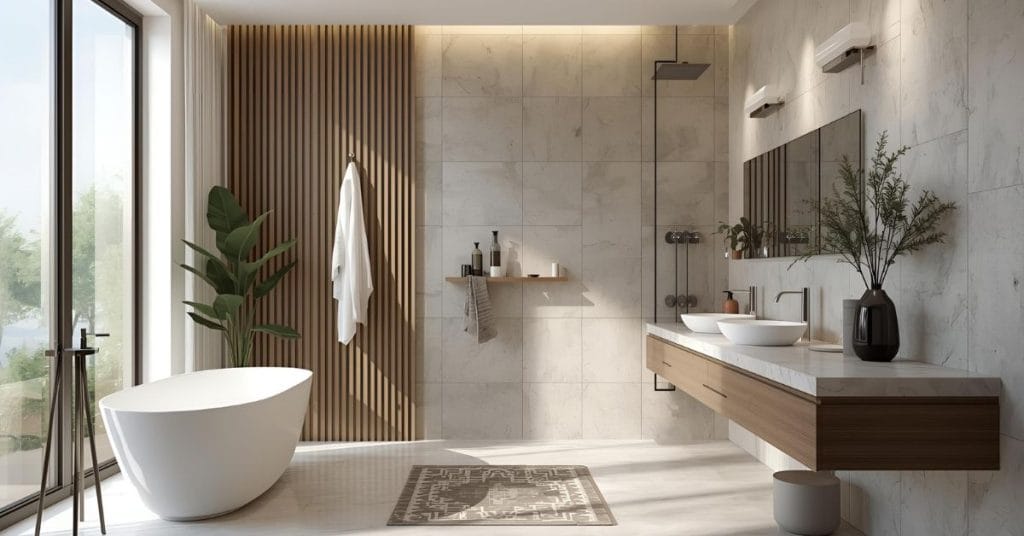
Bathroom renovation cost is influenced by the existing room, the number of fixtures, material selections and the amount of construction work required. These cost drivers apply to every project, from a small bathroom renovation to a larger main bathroom. The size of your bathroom, measured in square metres, matters, but it is only one part of the calculation, because the size of the room also affects how many tiles, fixtures and products are needed.
- Existing condition: Water-damaged wall sheeting, deteriorated flooring and damaged framing can require repairs after demolition.
- Plumbing layout: Moving a toilet, shower or vanity means you need to relocate plumbing, which can introduce additional drainage and water supply work.
- Tile selection: Natural stone, large-format tiles and intricate patterns can increase material and installation costs.
- Fixtures: Upgrading bathroom fixtures and fittings, such as designer tapware, wall-hung vanities, concealed cisterns, towel rails and custom shower screens, can increase product and installation costs. Heated towel rails also need a power connection, so they add electrical work as well as product cost.
- Structural changes: Removing walls, modifying windows or changing floor levels can require additional trades and approvals.
- Property access: Stairs, restricted access and limited space for deliveries or waste removal can affect labour and handling requirements. In an apartment bathroom, body corporate rules, lift bookings and working-hour limits may also apply.
One useful budgeting distinction is between essential construction work and optional upgrades. Repairing damaged floor framing may be necessary before installation can continue, whereas upgrading to a more expensive vanity is a choice that can be adjusted to suit the budget.
The biggest cost depends on the scope of the project. In a layout change it can be the plumbing and tiling labour, while in a premium renovation product selections and custom cabinetry can take a larger share.
Bathroom renovation cost breakdown: Where does the money go?
A full bathroom renovation involves several trades, with demolition, plumbing, waterproofing, tiling and fixture installation contributing to the overall cost. The important question when comparing quotes is what each trade allowance actually includes.
The following breakdown explains the work commonly involved. It deliberately avoids presenting individual trade prices as standard rates because published estimates differ in their treatment of labour, materials and preparation.
| Work component | Typical scope | What to check in the quote |
|---|---|---|
| Demolition and disposal | Removal of existing tiles, fixtures, fittings and building materials. | Whether labour, waste disposal, skip hire and site protection are included. |
| Plumbing | Rough-in, drainage alterations, water connections and final fixture connections. | Whether rough-in and final fit-off are separate charges or included together. Check whether relocating drainage is allowed for. |
| Waterproofing | Surface preparation and application of the required waterproofing system. | Whether materials, preparation, labour and required documentation are included. |
| Tiling | Floor and wall preparation, tile installation, adhesive, grout and finishing. | Whether tiles are supplied separately, and whether screeding, cutting, preparation and labour are included. |
| Electrical work | Lighting, exhaust fans, power points where required and electrical connections. | Whether fittings are supplied or owner-selected, and whether installation and connections are included. |
| Vanity and toilet | Supply and installation of cabinetry, basins, toilets and associated fittings. | Separate product allowances from installation labour. Check whether tapware and plumbing connections are included. |
| Shower screen | Measurement, manufacture, supply and installation of the selected screen. | Glass thickness, frame style, hardware, dimensions and installation costs. |
| Finishing work | Painting, silicone, mirrors, accessories, sealing and final cleaning. | Identify which finishing tasks are included and whether repairs outside the bathroom are excluded. |
Why labour and material allowances matter
A tiling allowance may cover installation labour only, while the homeowner pays separately for tiles, adhesive and grout. Another contractor may provide a combined supply-and-install price.
The same distinction applies to vanities, shower screens, toilets, tapware and other bathroom products. Ask for the product allowance and installation cost to be identified separately so that upgrading a fitting does not create confusion about the labour already included.
Trade costs also overlap when several tasks are grouped under one heading. For example, plumbing rough-in and final fixture connections are separate stages of the same installation. Check the full scope before adding individual allowances together.

How much does a small bathroom or ensuite renovation cost?
A small ensuite will typically cost less overall than a larger family bathroom, but its cost per square metre may be higher because essential construction costs do not decrease in proportion to floor area. Even a small bathroom renovation involves the full sequence of trades.
Consider two hypothetical South East Queensland renovation projects with different fixture requirements.
| Feature | Small ensuite | Family bathroom |
|---|---|---|
| Approximate floor area | 3–4 m² | 7–9 m² |
| Fixtures | Shower, toilet and vanity | Shower, bath, toilet and vanity |
| Renovation scope | Complete strip-out and replacement, retaining existing plumbing positions. | Complete strip-out and replacement, retaining existing plumbing positions. |
| Additional work | Less tiling and fewer fixtures, but essential trade work remains. | More tiling, additional bath installation and potentially more cabinetry. |
These are illustrative scenarios, not independently priced market averages. Both assume that the existing layout is retained and that there are no major concealed structural repairs.
The ensuite has fewer fixtures and less wall and floor area to tile. However, it still needs demolition, plumbing connections, electrical work, waterproofing and finishing. Those requirements account for a substantial part of the work regardless of room size.
The family bathroom requires more material and may involve additional installation work for the bath. Its larger footprint does not automatically mean that its cost will increase in direct proportion to its area.
For example, an ensuite with difficult drainage access can require more construction work than a larger bathroom where existing services are straightforward. Comparing the fixture count, layout and construction requirements gives a more useful picture than comparing square metres alone.
What does a mid-range or high-end bathroom renovation include?
The main difference between mid-range and premium bathroom renovations is the level of customisation, product specification and installation complexity. Both can involve a complete renovation, but the materials and design decisions change the final budget.
Mid-range bathroom renovation
A mid-range renovation generally uses quality, practical products without extensive custom construction or designer specifications.
Typical selections may include:
- Quality porcelain or ceramic tiles.
- A well-sized bathroom vanity with practical storage.
- Modern toilet and tapware.
- A frameless or semi-frameless shower screen.
- Updated lighting and ventilation.
- Standard-sized fixtures and cabinetry.
This approach suits homeowners who want a complete bathroom update while keeping the existing footprint and limiting unnecessary design complexity.
Premium bathroom renovation
Premium projects introduce more custom work and higher-specification products, which can increase both supply and installation costs.
Possible features include:
- Custom-designed vanities and storage.
- Natural stone or premium large-format tiles.
- Designer tapware and fittings.
- Custom frameless shower screens.
- Freestanding baths.
- Feature lighting and upgraded electrical fittings.
- Reconfigured layouts and architectural details.
Installation requirements matter as much as the product price. Large-format tiles, for example, can require more careful handling and substrate preparation. Custom cabinetry also needs accurate measurements and coordination with plumbing connections.
When setting priorities, focus on the features that affect everyday use, such as shower access, storage and ventilation, before committing the budget to decorative upgrades. A renovation that improves function, ventilation and waterproofing can also add value to your home, although the return depends on the property and the local market.

How plumbing, waterproofing and structural changes affect your budget
Plumbing relocation, concealed water damage and structural modifications can increase bathroom renovation cost because they introduce work that is not part of a straightforward fixture replacement.
Relocating plumbing
Moving a toilet, shower or vanity can involve new water supply connections, drainage alterations and additional installation work. The construction of the floor has a direct bearing on how difficult this work may be.
In a timber-framed home, plumbers may have access to pipework between the floor joists. The work still depends on joist direction, available clearance and existing drainage positions.
In a concrete slab home, relocating a shower waste or toilet drain may require cutting into the slab and repairing the concrete afterwards. This adds work beyond the plumbing connection itself and can make a seemingly small layout change more expensive.
Waterproofing and concealed damage
Waterproofing is essential to a full bathroom renovation. The system must be prepared and installed to meet the applicable requirements, rather than treated as an optional item that can be reduced to save money.
Once old tiles and wall linings are removed, previously concealed problems may become visible:
- Rotting timber or damaged floor structures.
- Water-damaged wall framing.
- Leaks around existing plumbing connections.
- Deteriorated or unsuitable wall substrates.
- Previous waterproofing failures.
These issues may need to be repaired before new waterproofing and tiling can proceed. The cost depends on the extent of the damage and whether repairs involve only the wet-area lining or more substantial structural work.
Queensland licensing and waterproofing documentation
Queensland homeowners should check that the contractor holds the appropriate QBCC licence for the contracted building work. The required licence class depends on the scope, while regulated plumbing and drainage work has separate occupational licensing requirements.
Waterproofing licensing and completion documentation are not the same thing. QBCC identifies waterproofing as a licence class, while the applicable waterproofing certificate provides documentation about the completed work. Ask who is undertaking the waterproofing, which licence covers it and what documentation will be supplied.
The relevant waterproofing standard, including applicable requirements under AS 3740, should also be addressed in the project documentation. The specific certification requirements depend on the work and circumstances.
Structural modifications
Removing walls, changing doorways, modifying windows or altering floor levels can require carpentry, engineering advice or building approvals. These changes may also affect the sequence in which plumbing, electrical and finishing trades can work.
Older South East Queensland homes can present additional inspection requirements when existing wet-area substrates or timber floor structures are exposed. In slab-built homes, drainage access can be a significant factor when considering a different bathroom layout.
How to plan your bathroom renovation budget and avoid unexpected costs
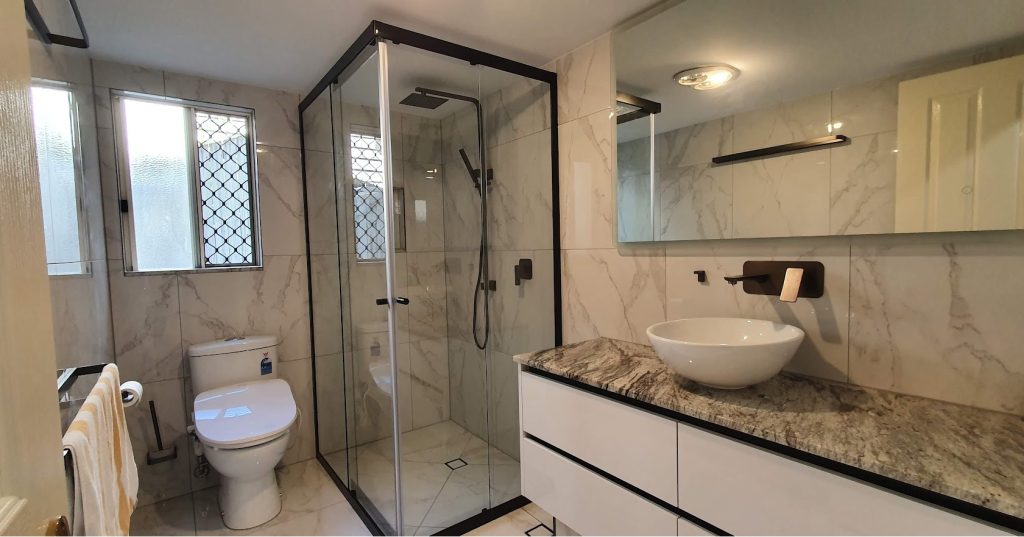
A realistic bathroom renovation budget includes the agreed construction scope, product selections and a contingency for problems that cannot be confirmed until demolition is complete.
A useful planning allowance is 10% to 15% of the expected project cost, particularly for older bathrooms or properties with a history of leaks.
For example, a $25,000 renovation budget with a separate 10% to 15% contingency means keeping an additional $2,500 to $3,750 available for unforeseen renovation work. If the full buffer were needed, the total renovation cost would reach $27,500 to $28,750, and the final cost depends on what demolition reveals. This is a planning buffer, not an amount that should automatically be spent.
One of the simplest ways to keep costs under control is to retain existing fixture positions. If you change the layout, ask for relocated drainage and water supply to be priced separately.
Planning your renovation budget before requesting quotes
- Define the scope. Decide whether the bathroom needs a cosmetic refresh or a complete strip-out and rebuild.
- Set the total budget. Account for materials, labour, GST and contingency.
- Choose essential fixtures. Identify which vanity, toilet, shower screen, bath and tapware need replacing.
- Confirm layout decisions. Identify any planned changes to plumbing locations, walls and openings.
- Choose preferred finishes. Establish realistic product allowances for tiles, fittings and cabinetry.
- Compare equivalent quotes. Make sure contractors are pricing the same work and similar product specifications. Compare the total cost, including GST, rather than individual line items.
Use an itemised renovation quote checklist
Before signing, check that the quote and supporting documents clearly identify the following:
- Scope: The demolition, preparation, installation and finishing work included.
- Exclusions: Structural repairs, hazardous material removal and other work not covered by the price.
- Materials: Product selections, quantities, specifications and allowance values.
- Labour: Trade work, installation and supervision included in the price.
- Plumbing and electrical: Rough-in, connections, fixture installation and applicable documentation.
- Waterproofing: Preparation, membrane installation, relevant licensing and required completion documentation.
- Variations: How additional work, price changes and changes to the agreed scope will be documented and approved.
- GST: Whether the quoted total includes GST.
- Contract documents: Payment arrangements, specifications, insurance information and relevant certificates.
Queensland’s current QBCC guidance requires a written contract for domestic building work priced over $3,300, including labour, materials and GST. For contracts of $20,000 or more, the contractor must provide the QBCC consumer building guide before the homeowner signs.
Contract variations also need to follow the applicable written variation requirements. Ask for the proposed work and price change to be documented and agreed to before additional work proceeds, subject to the relevant legal requirements and exceptions.
This process is particularly relevant when demolition reveals concealed damage. The repair scope and additional cost should be explained rather than absorbed into an unclear allowance.
Eternity Bathrooms promotes fixed-scope quotes, coordinated trades, project management and written variation details for unforeseen work. These details are relevant when comparing quotes because they help homeowners understand what has been included and how changes to the agreed work will be handled.
Planning a bathroom and laundry renovation together
Planning bathroom and laundry renovations together allows homeowners to coordinate design selections, trade scheduling and access to the property. It does not automatically reduce the total cost, but it can make the combined scope easier to assess.
What can be coordinated?
- Design selections: Coordinate cabinetry, tapware, tiles and colours where both rooms have a shared design direction.
- Trade scheduling: Plan plumbing, electrical and tiling work around the requirements of both spaces.
- Material deliveries: Review whether ordering tiles, fittings and cabinetry together suits the project schedule.
- Property access: Organise deliveries, waste removal and access for trades across both work areas.
- Combined budgeting: Assess the total investment while retaining a separate budget for each room.
Any potential efficiencies depend on the scope, distance between rooms, trade availability and scheduling. Each space still has its own preparation, installation and compliance requirements.
Bathroom and laundry renovation planning checklist
- Decide whether both rooms need a complete renovation or whether one requires selected improvements.
- Set a combined budget with a separate contingency allowance.
- Identify shared plumbing or drainage considerations.
- Choose compatible cabinetry, tiles and fittings where appropriate.
- Confirm whether the laundry needs additional storage, bench space or appliance adjustments.
- Discuss how household access to essential facilities will be managed during the work.
- Request separate cost breakdowns for the bathroom and laundry.
- Check exclusions, material allowances and variation procedures for both projects.
Separate cost breakdowns are particularly useful if unexpected bathroom repairs affect the available budget for the laundry. They allow homeowners to assess each project without losing sight of the total investment.
Homeowners can explore Eternity Bathrooms’ bathroom renovation service and laundry renovation options when considering improvements to both spaces.
Getting a bathroom renovation quote in Brisbane and South East Queensland
A useful bathroom renovation quote should identify the work required, the materials supplied and the process for managing changes. Comparing those details is more reliable than choosing a contractor based on the lowest headline price.
Eternity Bathrooms is a family-run renovation business based in Stapylton, Queensland, servicing Brisbane Southside, Logan, Beenleigh, Pimpama, Redlands and the Gold Coast. The business provides bathroom and laundry renovations, plumbing, waterproofing and tiling.
Owner Shannon Jones has 20 years of industry experience, as stated on the business website. Eternity Bathrooms holds QBCC Licence 15360519 and is a member of Master Builders Queensland.
The business promotes coordinated trades, fixed-scope quotes and project management, with written variation details for unforeseen work. These are useful points to discuss when assessing how a renovation will be scoped, quoted and managed.
Before requesting a quote, prepare the following information:
- The current condition and approximate size of the bathroom.
- Whether the existing layout will remain or change.
- Your preferred fixtures, tiles and finishes.
- Any known leaks, plumbing problems or structural concerns.
- Your approximate renovation budget.
- Whether a laundry renovation is also being considered.
For an overview of the available work, visit the Eternity Bathrooms services page.
If you are considering a bathroom renovation in Brisbane or South East Queensland, contact Eternity Bathrooms to discuss your requirements and request a quote. Homeowners planning both bathroom and laundry improvements can discuss the two projects together and review their individual scopes and budgets.
Related bathroom renovation guides
- What happens during a bathroom renovation: a week-by-week guide
- Common bathroom renovation mistakes and how to avoid them
- Bathroom remodel vs renovation: what is the difference?
- Bathroom designs in Brisbane for Queensland conditions
Frequently asked questions about bathroom renovation costs
How much does a full bathroom renovation cost in Australia in 2026?
The cost of a bathroom renovation depends mainly on whether the price covers a cosmetic update or a complete renovation. A full strip-out should account for demolition, waterproofing, tiling, plumbing, fixtures and finishing. When comparing estimates, check whether the quoted amount includes materials and labour, as well as GST.
Is it cheaper to renovate a small bathroom?
Usually, a smaller room requires fewer tiles and potentially fewer fixtures. However, fixed construction tasks still need to be completed. A compact ensuite with difficult access or drainage requirements may therefore cost more than a larger bathroom with straightforward construction.
Does moving plumbing increase bathroom renovation costs?
Yes. The additional cost depends on where the existing pipes are located and how the floor is constructed. Timber floors may provide access between joists, while concrete slab homes can require cutting and repairing the slab to relocate drainage. Ask for these works to be identified separately in the quote.
Can I renovate my bathroom and laundry at the same time?
Yes. Both rooms can be included in a coordinated renovation plan with separate scopes and budgets. This allows homeowners to review shared design selections, trade scheduling and property access before work begins. The combined project should still be assessed against the budget available for each room.